
Self-Employed Mortgage Specialists
The bank said no? We hear that all the time. Banks use rigid income calculations that don’t work for business owners. We know which lenders understand self-employment — and how to structure your file for approval.
– WE UNDERSTAND BUSINESS OWNERS
Why Banks Make this Harder Than It Needs to Be
Banks look at your tax returns and see a low net income — because you’re smart about write-offs. They don’t understand that your $60,000 reported income actually reflects a business generating $150,000 in revenue.
The problem isn’t your income. It’s how the bank calculates it.
As mortgage brokers who specialize in self-employed clients, we know which lenders:
Common scenarios we help with:
✅ Use gross revenue instead of net income
✅ Accept business bank statements alongside tax returns
✅ Work with businesses that are less than 2 years old
✅ Offer stated income programs for qualified borrowers
✅ Understand seasonal and variable income
Julie Jeffery (RECA License #L-184716) and Andy Jeffery (BC License #X301234) have helped hundreds of business owners get approved after being declined elsewhere.
As a self-employed contractor, I was turned down by my bank twice. Julie found a lender who understood my income and got me approved in under a week. She made a stressful situation feel manageable.
– WHO WE HELP
Self-Employment Comes in Many Forms
Whether you’re a freelancer, contractor, or incorporated business owner, we’ve helped clients just like you.
Contractors & Trades
Electricians, plumbers, carpenters, and skilled trades with variable project income. We understand seasonal work and contractor vs. employee distinctions.
Freelancers & Consultants
IT consultants, designers, writers, and gig economy workers. Multiple income streams are common — and we know how to present them to lenders.
Incorporated Business Owners
Whether you pay yourself salary, dividends, or a combination, we can structure your application to maximize your qualifying income.
Commission-Based Professionals
Real estate agents, insurance brokers, and sales professionals. Your income may vary year to year, but that doesn’t mean you can’t qualify.
Just started your business? While most banks require 2 years, we have lenders who will consider newer businesses with strong financials.
Side Business + Employment
Have a day job plus a side business? We can often use both income sources to maximize your approval amount.
– WHAT YOU’LL NEED
Documentation for Self-Employed Mortgages
Don’t worry if you don’t have everything — we’ll tell you exactly what’s needed for your specific situation.
STANDARD DOCUMENTS
✅ T1 General tax returns (2 years, all pages)
✅ Notice of Assessment (NOA) from CRA (2 years)
✅ Business financial statements if incorporated
✅ Articles of Incorporationor business license
✅ Business bank statements (3-6 months)
✅ Personal ID and proof of address
FOR STATED INCOME PROGRAMS
✅ Larger down payment (typically 20-35%)
✅ Proof business exists (website, contracts, invoices)
✅ Business bank statements showing revenue
✅ Accountant letter confirming income (some lenders)
✅ Good credit history (typically 650+)
💡 Pro Tip
Keep business and personal expenses separate. Lenders love clean, organized financials — it makes approval faster and smoother.
– COMMON QUESTIONS
Self-Employed Mortgage FAQ
Can I get a mortgage with less than 2 years self-employed?
What if my tax returns show low income due to write-offs?
Do I need a bigger down payment as a self-employed borrower?
Can I qualify with bad credit as a self-employed borrower?
What's the difference between stated income and traditional verification?
How do you calculate self-employed income?
Self Employed Mortgages Blogs

Newly Self-Employed? Your Mortgage Options
Newly Self-Employed? Your Mortgage OptionsMost lenders want 2 years of self-employment history. But what if you've only been running your business for 6 months? Or just made the leap from employment? You may have more options than you think.The 2-Year...
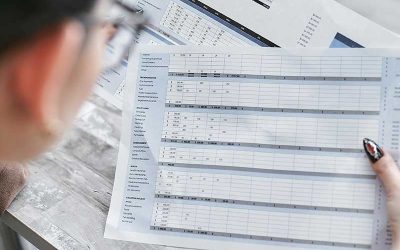
Preparing Your Documents for Self-Employed Mortgages
Preparing Your Documents for Self-Employed MortgagesSelf-employed mortgage applications require more documentation than employee applications. Having everything ready speeds up the process and prevents surprises. Here's your comprehensive checklist.Personal Tax...

Stated Income Mortgages: What Are Your Options?
Stated Income Mortgages: What Are Your Options?Your tax returns don't reflect your actual income. You write off everything you can — smart tax planning — but now your qualifying income is too low for the mortgage you need. What are your options?Stated Income...

Business-for-Self vs Incorporated: What Matters?
Business-for-Self vs Incorporated: What Matters?Whether you're a sole proprietor or run an incorporated business affects how lenders view your income. Understanding the difference helps you prepare the right documents and set realistic expectations.Sole Proprieter /...

Mortgage Options for Self-Employed Canadians
Mortgage Options For Self-Employed CanadiansSelf-employed Canadians often face unique challenges when applying for a mortgage. Your income may be strong, but tax optimization strategies can make your reported income look lower on paper. The good news: there are...
The Right Mortgage, Not Just the Lowest Rate
We understand business owners because we’ve helped hundreds of them. Book a free consultation and let’s look at your real options.
Julie Jeffery · julie@elevationmortgage.ca · 403.828.4832
AndyJeffery · andy@elevationmortgage.ca · 403.828.8832

Licensed in Alberta and British Columbia
© 2026 Elevation Mortgage · Independent Mortgage Brokers · Serving Alberta & BC